A-Rated Double Glazed Window and Door Systems
Modern double glazing forms the thermal envelope of energy-efficient homes across London and Surrey, cutting conductive heat loss by up to 50% compared to legacy single glazing while lowering heating expenditure. Hermetically sealed 28 mm double-glazed insulating units (IGUs) achieve whole-window Uw values of 1.4 W/m²K or better under Approved Document L, delivering centre-pane Ug ratings of 1.1 W/m²K through soft-coat low-emissivity glass, 90% argon gas fills, and warm-edge composite spacers.
Whether upgrading draughty timber sliding sashes, replacing blown sealed units, or installing high-performance casements and patio doors, proper glass specification and precision installation are vital to prevent cold spots, stop perimeter draughts, and maintain acoustic comfort. Window Fitters Ltd provides comprehensive double glazing services, ranging from standalone sealed unit replacements to whole-property window and doorset installations.
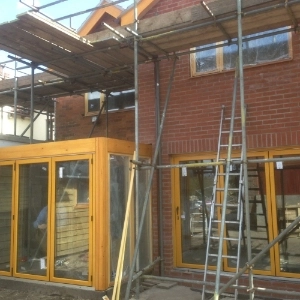
Flexible Double Glazing Procurement and Installation Pathways
Window Fitters Ltd operates first and foremost as a specialist glazing installation contractor delivering precision fitting services across South London, Surrey, and surrounding regions. We provide three distinct procurement pathways to suit private homeowners, building contractors, and commercial developers:
Installation-Only and Labour-Only Fitting Teams
Designed for clients who purchase double-glazed windows, doorsets, or sealed units directly from independent fabricators, trade counters, or online suppliers. Our directly employed, CSCS-certified 2-man glazier teams are available on fixed day rates of £540 to £580 per day (£540 local, £580 extended) or transparent per-unit fitting rates (£90 to £140 per casement window, £160 to £240 per sash window, £150 to £250 per doorset). Fitters arrive fully equipped with glass suction lifters, laser levels, and fixing anchors to install client-supplied products strictly to British Standard BS 8213-4, eliminating retail sales markups. Learn more about our labour-only glazing services and hire qualified professional window fitters.
Sourced Trade Supply with Professional Installation
Under this collaborative route, our surveyor performs an exacting on-site technical survey, recording structural aperture dimensions, checking lintel bearings, and specifying thermal tolerances. We source high-performance sealed units and profile systems directly from trade extruders and glass processors at wholesale trade prices, passing direct savings of 30% to 50% on to you compared to national retail sales companies. Our glazier teams manage delivery, installation, toe-and-heel glass packing, and perimeter weathersealing. Compare routes in our guide to supply and fit versus supply-only and review our trade frame supply options.
Complete Supply and Installation Packages
A single-contract solution covering your project from initial laser survey through custom frame fabrication, on-site installation, Local Authority Building Control sign-off, Building Regulations compliant self-certification, and a 10-year insurance-backed guarantee. This option suits homeowners and developers seeking end-to-end contractor accountability, guaranteed regulatory compliance, and seamless scheduling without the need to coordinate separate suppliers. Request a written estimate via our online quote request portal or browse our comprehensive installation services directory.
Anatomy and Engineering of an Insulated Glass Unit
Modern double glazing relies on an Insulated Glass Unit (IGU), also referred to as a double-glazed unit (DGU). Each unit is a factory-manufactured hermetic composite engineered to balance visible daylight transmission, acoustic dampening, and radiant thermal reflection:
| Component Layer | Material Specification | Engineering Function & Performance Benefit |
|---|---|---|
| Outer Glass Pane | 4 mm clear float glass (or 4 mm/6 mm toughened safety glass) | Admits natural daylight and solar energy into living spaces while providing structural resistance against exterior wind loading and atmospheric exposure. |
| Inert Gas Cavity | 16 mm to 20 mm cavity charged with 90% pure Argon gas (or Krypton for narrow 8 mm to 10 mm cavities) | Argon gas has a thermal conductivity of 0.016 W/mK, approximately 67% lower than dry air, suppressing convective heat transfer between panes. For ultra-slim sash rebates, Krypton gas (0.0094 W/mK) achieves equivalent centre-pane insulation within compact cavities. |
| Warm-Edge Spacer Bar | Swissspacer Ultimate composite warm-edge spacer bar with molecular sieve desiccant | With an ultra-low thermal conductivity of 0.14 W/mK, Swissspacer Ultimate cuts perimeter edge thermal bridging by up to 75% compared to aluminium bars. Internal desiccant crystals actively absorb residual moisture to eliminate internal misting. |
| Inner Low-E Glass Pane | 4 mm Saint-Gobain Planitherm Total+ soft-coat glass (applied to Cavity Surface 3) | Microscopically thin, magnetron-sputtered metallic coating reflects long-wave radiant heat from radiators and heating systems back into living spaces while allowing short-wave solar radiation to pass through. |
| Dual Perimeter Hermetic Seal | Primary polyisobutylene (PIB) inner seal + secondary polysulphide structural seal | The primary PIB seal provides an absolute gas-tight and moisture vapour barrier. The secondary polysulphide seal bonds the glass panes structurally to maintain unit integrity over decades of thermal expansion. |
Glazing Performance and Specification Comparison Matrix
Different rooms, property orientations, and external environments require tailored glass build-ups. The following matrix details typical thermal, acoustic, and safety specifications across standard residential and architectural double glazing options:
| Glazing Specification | Glass Build-Up (Outer / Cavity / Inner) | Centre-Pane Ug (W/m²K) | Whole-Window Uw (W/m²K) | Acoustic Rating (dB) | Key Application & Regulatory Standard |
|---|---|---|---|---|---|
| Standard Float Glazing (Legacy) | 4 mm Float + 16 mm Air + 4 mm Float | 2.8 W/m²K | 2.9 to 3.1 W/m²K | 29 to 31 dB | Historic pre-2002 installations. Fails modern Approved Document L requirements. |
| High-Performance Low-E Double Glazing | 4 mm Float + 16 mm Argon + 4 mm Low-E | 1.1 to 1.2 W/m²K | 1.3 to 1.4 W/m²K | 31 to 33 dB | Standard residential window replacement. Fully complies with Approved Document L. |
| Acoustic Laminated Double Glazing | 6.8 mm Optiphon / Stratophone Acoustic Laminate + 16 mm Argon + 4 mm Low-E | 1.1 W/m²K | 1.3 to 1.4 W/m²K | 38 to 42 dB | Urban properties facing main roads, railway corridors, and flight paths under Approved Document E. Explore acoustic soundproof glazing. |
| Solar Control Double Glazing | 6 mm Solar Control + 16 mm Argon + 4 mm Low-E | 1.0 to 1.1 W/m²K | 1.3 to 1.4 W/m²K | 32 to 34 dB | South-facing glazed extensions, bifold doors, and lantern roofs. Mitigates overheating under Approved Document O. |
| Toughened Safety Double Glazing | 4 mm Toughened + 16 mm Argon + 4 mm Toughened Low-E | 1.1 W/m²K | 1.3 to 1.4 W/m²K | 31 to 33 dB | Mandatory for external doors, side panels within 300 mm, and low-level glazing below 800 mm under Approved Document K. |
| High-Efficiency Triple Glazing | 4 mm Low-E + 12 mm Argon + 4 mm Float + 12 mm Argon + 4 mm Low-E | 0.6 to 0.8 W/m²K | 0.8 to 1.0 W/m²K | 34 to 36 dB | Ultra-low-energy retrofits and Passivhaus developments requiring deep multi-chamber frame profiles. |
Technical Performance Parameters: Understanding Uw, Ug, and G-Values
When selecting double-glazed windows, reviewing individual performance metrics prevents costly specification mistakes. Fenestration ratings evaluate overall system efficiency:
- Whole-Window Uw versus Centre-Pane Ug: The centre-pane value (Ug) measures heat loss solely through the central glass area. In contrast, the whole-window value (Uw) evaluates the entire window assembly, including sash profiles, outer frames, steel reinforcements, and perimeter spacer thermal bridging. Approved Document L requires a whole-window Uw of 1.4 W/m²K or lower. Review our detailed window U-value guide and learn about window energy ratings.
- Solar Heat Gain Coefficient (g-value): The g-value indicates the proportion of solar energy transmitted through the glass, ranging from 0.0 to 1.0. Standard Low-E units maintain a g-value of approximately 0.65 to 0.71, allowing free passive solar heating in winter. For heavily glazed south-facing rear elevations, solar control coatings lower the g-value to 0.35 to 0.40, preventing excessive internal overheating under Approved Document O.
- Light Transmission (Lt): Represents the percentage of visible daylight passing through the glass. Soft-coat Low-E glass maintains an Lt rating of 75% to 81%, delivering bright, naturally illuminated interiors without the visible grey tint associated with older hard-coat glass.
- Sound Reduction Index (Rw + Ctr): Measures acoustic attenuation in decibels (dB). Standard double glazing dampens noise by approximately 31 to 32 dB. By introducing an asymmetric glass configuration with Saint-Gobain Optiphon or AGC Stratophone acoustic PVB interlayer (such as a 6.8 mm acoustic laminated outer pane paired with a 4 mm inner pane), sound resonance frequencies are broken, eliminating the coincidence frequency dip between 1,000 Hz and 3,150 Hz and elevating noise reduction to 38 to 42 dB.
Condensation Diagnostics: Location, Causes, and Permanent Remedies
Condensation on double glazing is one of the most misunderstood issues in residential fenestration. The exact surface where moisture forms reveals whether the issue stems from superior insulation, inadequate ventilation, or physical component failure:
External Condensation (Outside Glass Face)
Dew forming on the outside face of new double glazing during autumn or spring mornings is conclusive proof that the insulating unit is performing flawlessly. Because the Low-E coating and argon cavity retain internal heat inside the room, the outer glass pane stays cold. When outdoor morning humidity contacts the cold glass surface, dew forms naturally until daytime temperatures rise. Learn more in our guide to condensation on new windows.
Internal Condensation (Room-Side Glass Face)
Moisture on the indoor glass surface indicates high ambient room humidity combined with insufficient background ventilation. Everyday household activities like cooking, bathing, and drying clothes release litres of moisture vapour daily. If background ventilation is restricted, moisture migrates to the glass surface. The solution is opening trickle vents under Approved Document F, running mechanical extract fans, and maintaining consistent heating. Read our advice on trickle vents compliance.
Interstitial Condensation (Misting Between Panes)
Permanent fogging, water droplets, or calcium deposits between the two glass panes signals that the perimeter hermetic seal has failed. Atmospheric moisture has penetrated the cavity, saturating the desiccant crystals inside the spacer bar. Defogging chemicals or drill-and-plug gimmicks fail to restore performance; the permanent fix is a standalone sealed unit swap, preserving sound window frames. Review our guide to failed double glazing seal repairs and explore our glazing repair services.
Double Glazing Replacement Costs, Upgrades, and Heating Savings
Upgrading double glazing provides immediate financial and thermal benefits. Property owners have several cost-effective replacement routes depending on the condition of their existing frames:
| Scope of Glazing Work | Typical Cost Benchmark | Fitting Duration | Financial & Energy Efficiency Return |
|---|---|---|---|
| Misted Sealed Unit Swap (Glass Only) | £90 to £180 per unit fitted | 30 to 45 minutes per unit | Saves 60% to 75% compared to replacing complete window frames while restoring full thermal clarity and U-value efficiency. |
| Labour-Only Window Unit Fitting | £90 to £140 per casement (£160 to £240 per sash; £540 to £580/day team rate: £540 local, £580 extended) | 1.5 to 2 hours per opening | Eliminates retail product margins for trade clients and self-builders fitting client-supplied frames and glass units. |
| Complete uPVC Casement Replacement (Supply & Fit) | £450 to £750 per window | 1 to 2 days for whole property | Reduces annual space heating expenditure by £120 to £230 per year on a typical semi-detached home, delivering payback within 8 to 12 years. |
| Acoustic Laminated Glass Upgrade | £60 to £110 uplift per unit | Fitted during standard installation | Cuts perceived street traffic noise by up to 50%, substantially improving indoor living quality and sleep comfort. |
For complete property budgeting, explore our detailed cost to replace all windows in a 3-bed house, review our window and door installation pricing guide, and evaluate the full return on investment in our energy saving windows payback guide.
UK Building Regulations Compliance Summary for Double Glazing
Every double-glazed window and doorset installation must adhere strictly to statutory UK Building Regulations to ensure structural safety, energy conservation, and adequate indoor air quality:
Statutory Regulatory Framework for Glazing Work
- ✓ Approved Document L (Energy Conservation) Mandates a whole-window Uw value of 1.4 W/m²K (or Window Energy Rating Band B minimum) for replacement windows, and whole-door Ud of 1.4 W/m²K for external doorsets. Read our Building Regulations guide.
- ✓ Approved Document K (Impact Safety) Requires BS EN 12600 Class 1 safety glass in all external and internal doors, side glazed panels within 300 mm of doors up to 1,500 mm height, and any window glazing positioned below 800 mm from finished floor level.
- ✓ Approved Document F (Ventilation) Requires replacement windows to maintain or improve existing room ventilation through controllable background trickle vents: minimum 8,000 mm² equivalent area in habitable rooms and 4,000 mm² in kitchens and bathrooms.
- ✓ Approved Document B (Emergency Egress) Habitable first-floor rooms and ground-floor rooms without direct external door access require emergency escape windows with a minimum clear openable area of 0.33 m², minimum width and height of 450 mm, and a maximum cill height of 1,100 mm from the floor.
Explore matching window and door products: browse entrance and patio systems in our doors directory and door installation guide, explore standard uPVC casement windows, slimline aluminium windows, and period vertical sliding sash windows, consult our trade-qualified installers, review detailed project schedules in our double glazing installation time guide, and learn about specialist pet access solutions in our cat flap in double glazing guide.
Frequently Asked Questions About Double Glazing
Find authoritative answers regarding energy-efficient double glazing specifications, thermal U-values, acoustic laminated glass options, and installation workmanship.
What causes double-glazed units to fail and mist up with condensation? +
Misting between the panes occurs when the dual perimeter hermetic seal degrades over time due to UV radiation exposure, natural thermal pumping expansion, or blocked frame drainage slots that allow standing water to attack the sealant. Moisture vapour penetrates the cavity, supersaturating the desiccant crystals inside the spacer bar and causing permanent fogging.
Can you replace just the misted double-glazed unit without replacing the window frame? +
Yes. If your existing uPVC, aluminium, or timber window frames remain structurally sound, fitters can unclip the internal glazing beads, remove the failed sealed unit, clear the rebate drainage channels, and install a brand new 28 mm Low-E argon-filled unit. This restores crystal clarity and thermal efficiency while saving up to 75% compared to whole window replacement.
What is the difference between whole-window Uw and centre-pane Ug values? +
The centre-pane Ug value measures heat loss purely through the glass unit itself (typically 1.1 W/m²K for modern argon Low-E units). The whole-window Uw value evaluates thermal performance across the entire window system, incorporating the sash profile, outer frame chambers, thermal breaks, and spacer edge bridging. Approved Document L compliance requires a whole-window Uw of 1.4 W/m²K or better.
Why does condensation form on the outside face of newly installed double glazing? +
External morning condensation is proof of outstanding thermal insulation. Because modern Low-E coatings and argon gas effectively trap heat indoors, minimal warmth escapes to warm the outer pane of glass. When humid outdoor morning air contacts the cold exterior glass surface, moisture condenses naturally as dew until morning sunlight evaporates it.
How much noise does acoustic laminated double glazing block compared to standard glass? +
Standard double glazing achieves an acoustic rating of 31 to 32 dB. By specifying acoustic laminated glass (such as 6.8 mm glass with a specialised polyvinyl butyral acoustic interlayer paired with a 4 mm inner pane), sound reduction increases to 38 to 42 dB. Because the decibel scale is logarithmic, a 10 dB improvement represents an approximate 50% reduction in perceived external traffic noise.
Can I purchase my own double-glazed windows and hire your teams for installation only? +
Yes. Providing dedicated installation-only glazier teams is a fundamental part of our business. We regularly install client-procured windows and doorsets purchased from trade counters, fabricators, or online suppliers. Our teams work on fixed daily rates of £540 per day locally (under 15 minutes travel) or £580 per day for extended travel (15 to 45 minutes) for a 2-man team (£260 to £290 for a single fitter), or transparent per-unit rates, providing precision laser installation strictly to British Standard BS 8213-4.

Author & Technical Reviewer: Marian Gheorghe
Head Installer & CEO, Window Fitters Ltd
Marian Gheorghe is the Active Director and Team Leader Installer at Window Fitters Ltd. With over 15 years of hands-on experience, he oversees technical safety and UK Building Regulations compliance for all residential and commercial glazing contracts.
Ready to discuss your project?
Window Fitters Ltd provides window and door installations across London and Surrey for residential, trade, and commercial projects.
Message our team on WhatsApp or send an enquiry with your drawings, photos, or measurements to receive a free, no-obligation quote.
Share this page on social media, whatsapp, print it or email to anyone:
Verified Google & MyBuilder Reviews

"Stunning Sash Windows in Croydon"
"Marian and his team replaced our old Victorian sash windows. They were clean, fast, and the double glazing has completely blocked out the street noise. Highly recommended!"
"Excellent Bifold Doors in Bromley"
"Installed beautiful grey aluminium bifold doors for our new kitchen extension. Smooth gliding mechanism and great insulation. The best quote we got in Kent."
"Perfect Front Door Upgrade in Sutton"
"Very happy with our new composite door installation. Excellent lock security and high-quality GRP slab finish. Fast half-day fitting and no mess left behind."